If you've ever tried to explain the difference between shounen and shoujo romance to someone new to manga, you probably ran into the same wall most people do. "Isn't shoujo just the romance one?" Yes…but not really. It’s like saying pizza is only Italian. The lines are rather blurrier than most fans realize, and the gap between the two has been quietly narrowing over a decade.
Let’s break it down properly, from what these labels actually mean, to how romance is structured differently in each of these demographics, and why that difference matters less now than it ever did.
Shounen and Shoujo as Demographics
First, a quick clarification before anything else: shounen and shoujo are demographic labels, not genres. The Japanese manga publishing industry segments its magazines by target readership. Shounen (少年) refers to manga marketed toward young boys, and shoujo (少女) refers to manga marketed toward young girls. This is historically derived from the magazines that manga are initially published in before making its way to a serialized book.
Shounen manga is published in magazines such as Weekly Shonen Jump, Weekly Shonen Magazine, and Shonen Sunday. Shoujo manga run in publications like Margaret, Ribon, Bessatsu Margaret, and Nakayoshi. If a manga is serialized in one of those shounen magazines, it's shounen, regardless of whether it has more romance than many shoujo series out there. This confuses people all the time, and honestly it's understandable. A lot of early shounen titles that were serialized in the West were mostly action (i.e. Dragon Ball, Naruto, One Piece, etc), while many of the shoujo titles that arrived were very romance-oriented (i.e. Sailor Moon, Fruits Basket, Fushigi Yugi, etc). Consequently, a lot of people developed a very quick association: shounen = action, shoujo = romance.
That shortcut just isn’t accurate anymore and may never have been accurate to begin with.

How Shounen Romance Has Changed Since the Early 2000s
Romance has always had a quiet seat at the shounen table, but it's changed more than most people give it credit for. Looking back across three decades, there's a pattern in what was getting published, what eventually made it to Western shelves, and how readers' expectations evolved along the way.
Back in the early 2000s, the dominant formula was the harem romcom. Series like Love Hina and Ai Yori Aoshi set this template: an indecisive male lead, large casts of girls competing for his attention, and little to no resolution. These titles were among the first wave of romance manga to get licensed in the US, largely through publishers like Tokyopop and Geneon, and they shaped what Western fans expected from the genre.
Around the same time, Clannad arrived as a visual novel in 2004 and shifted something. Though it was aimed at a male audience and its manga adaptations ran across seinen-adjacent publications, the anime adaptation by Kyoto Animation in 2007 brought a kind of emotional sincerity that the harem format simply wasn't doing.
It asked readers to care about characters on a deeper level… and a lot of them did. That combination of targeting the male-demographic and genuine emotional storytelling started quietly influencing what came next.
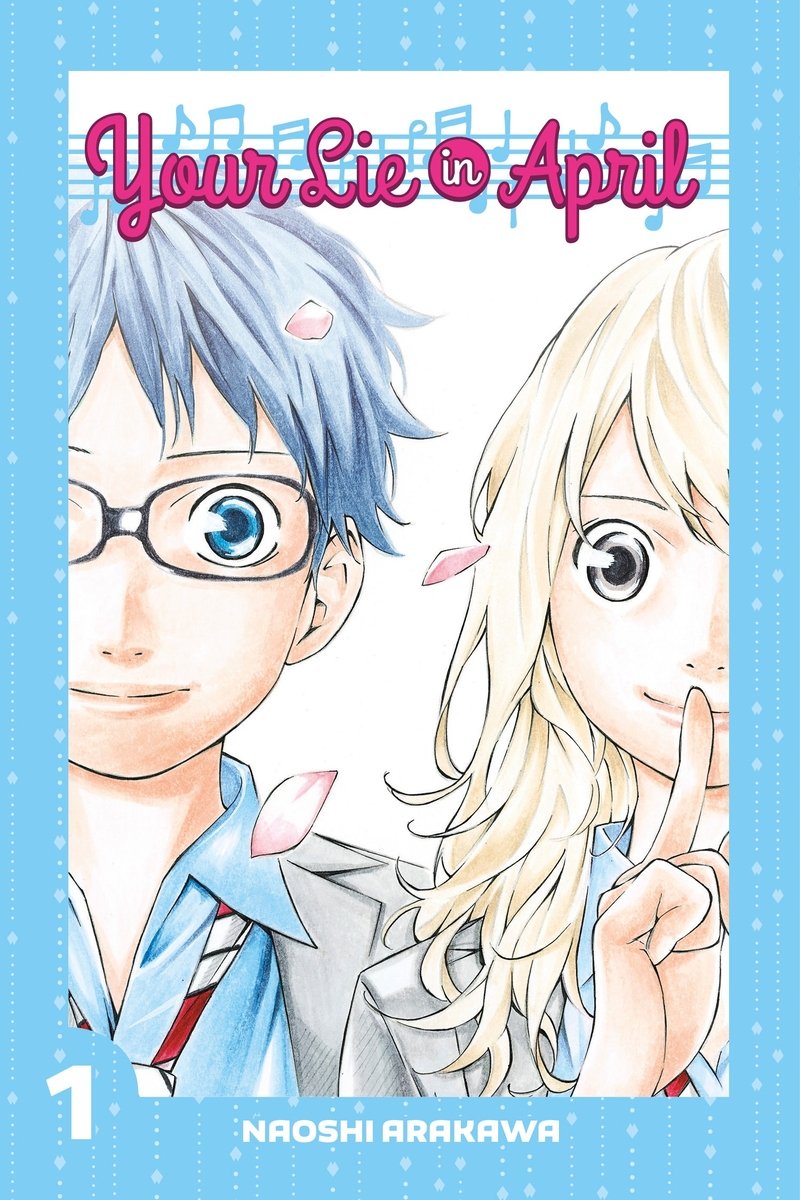
The 2010s brought a noticeable pivot. Nisekoi leaned hard into the fake-relationship format, while Your Lie in April had a romance that made people cry in the way Clannad had years before. Toradora!, which started as a light novel in 2006 and reached manga serialization by 2008, also aged particularly well in this era because it actually resolved its romance properly, which still felt unusual at the time. By the end of the decade, series like The Quintessential Quintuplets and We Never Learn were deliberately structured around a clear eventual ending, a harem format with a conclusion, and showed how much reader expectations had changed.
It asked readers to care about characters on a deeper level… and a lot of them did. That combination of targeting the male-demographic and genuine emotional storytelling started quietly influencing what came next.
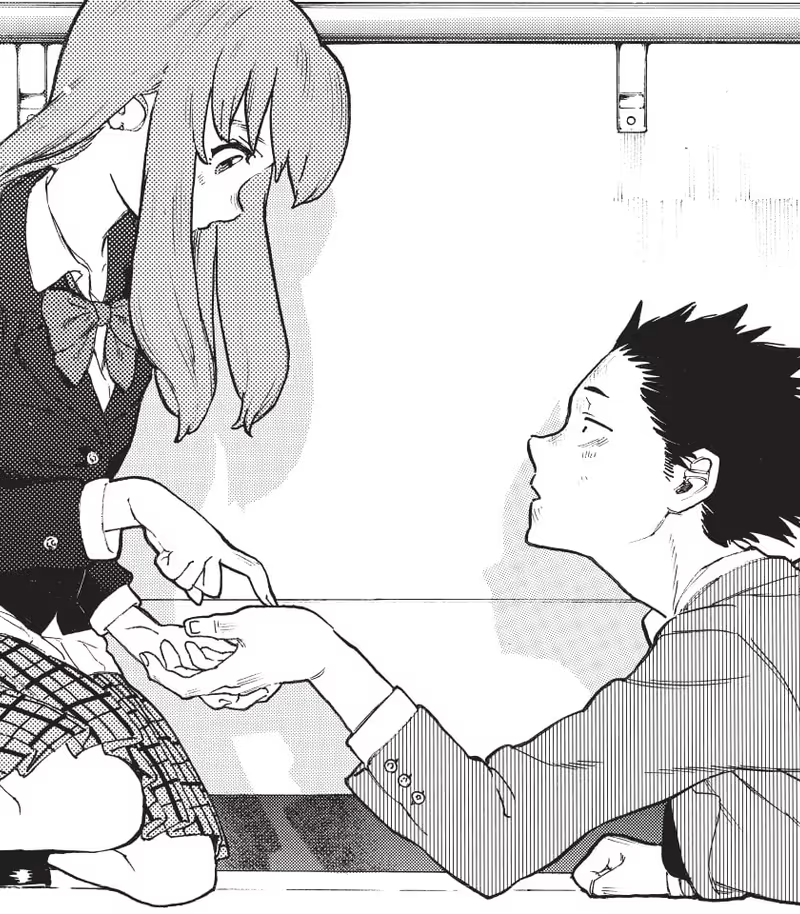
Before the 2020s, the direction had shifted toward something more emotionally focused. A Silent Voice, serialized in Weekly Shonen Magazine and adapted into a critically acclaimed film in 2016, is one of the clearest examples of this: a shounen story where romance and emotional healing between its two leads is the entire plot. The old fanservice-heavy harem formula that dominated the 2000s had largely given way to stories where the couple actually communicate, and where the romance feels like something you root for rather than something that keeps getting delayed.
US Licensed Shounen and Seinen Romance Series by Decade
For a long time, shounen romance was a distinct niche with very few titles within the genre. Using data from MangaUpdates, the exponential growth of the genre becomes even clearer.
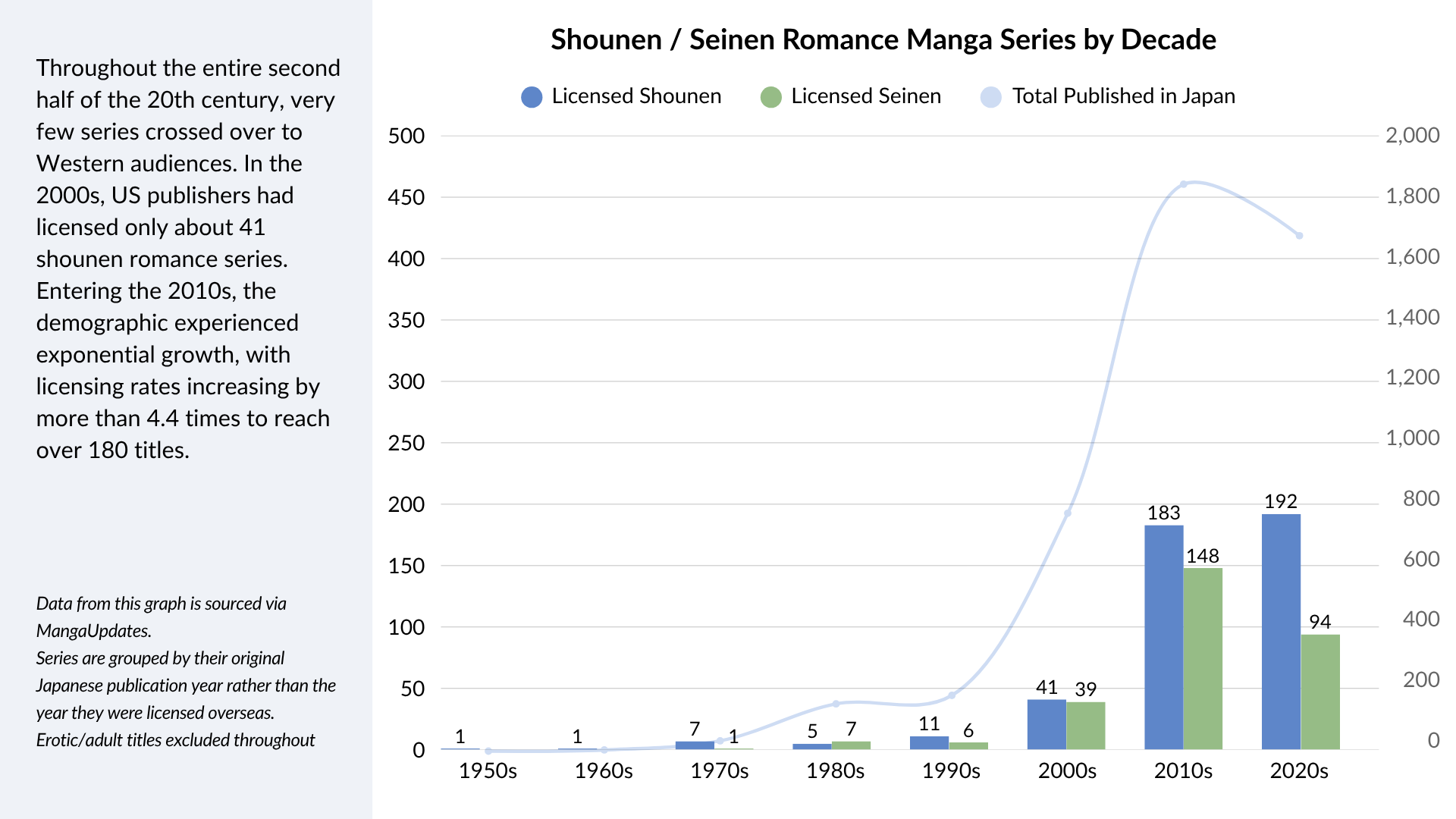
Throughout the entire second half of the 20th century, very few series crossed over to Western audiences. In the 2000s, US publishers had licensed only about 41 shounen romance series. Entering the 2010s, the demographic experienced exponential growth, with licensing rates increasing by more than 4.4 times to reach over 180 titles.
Seinen romance has also grown, though at a more modest pace. The seinen demographic frequently captures stories that do not always fit neatly into traditional shounen or shoujo demographics, which has contributed to its continued growth over the last 10 years.
The Real Differences Between the Two
As mentioned in the earlier sections of this article, the most common mistake is treating these demographics as if they describe content as a genre instead of publishing context. People assume shoujo = emotional, drama, slice of life, and romance, and shounen = action, fast-pace, and fanservice. That's not wrong as a general pattern, but it leads to misidentifying a lot of series.
One reason shounen and shoujo romances developed differently traces back to editorial culture and publishing schedules. Weekly Shounen Jump operates on a strict seven-day serialization cycle, a pace that shapes nearly every aspect of its storytelling. Under that kind of pressure, romance is often woven in as a secondary thread that creates tension while readers come back week after week. Structurally, this helps explain why shounen romance has historically leaned towards comedy and unresolved will-they-won’t-they dynamics.
Weekly Shounen Jump’s editorial identity, which historically has been built around “friendship, effort, and victory,” ultimately means that any romance has to share space with action, competitive, and/or conflict-driven narratives. On the other hand, Bessatsu Margaret operates on a monthly serialization cycle, which allows stories more room for gradual character development, internal reflection, and slower emotional pacing. The additional breathing room shoujo magazines historically had compared to shounen ones established a pacing and storytelling style that shoujo became known for. Many of the storytelling differences readers associate with shounen and shoujo are partly a product of editorial structures – and how often the artists had to turn in pages – rather than the demographic labels themselves. Even so, these are tendencies, not rules, and over the past decade many series have already moved beyond them.
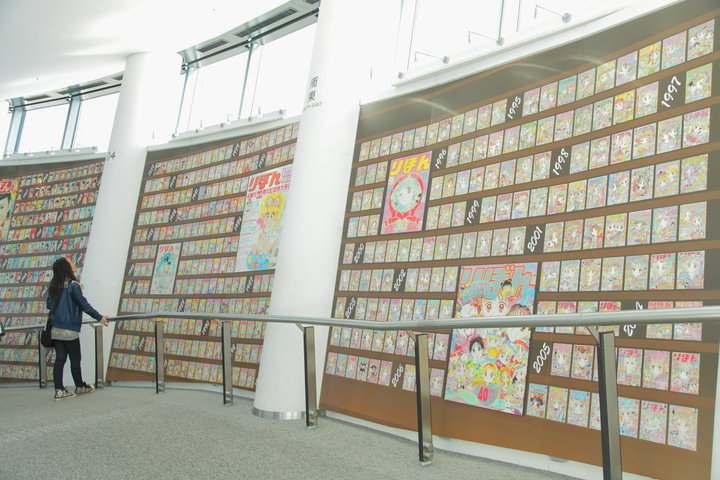
Yona of the Dawn illustrates this very well. The series contains many of the elements commonly associated with shoujo romance: a female protagonist, romantic interest, emotional depth, and intense drama as Yona experiences loss, grief, and survival. Yet structurally, it's an epic fantasy with action and politics, warfare, and genuine stakes beyond who the heroine ends up with. Treating it as "just a romance" undersells what it really is.
A common misunderstanding about the shounen demographic is the assumption that romance represents an emotional “ceiling.” Because the demographic targets young boys and men, people often assume that any romance will either be overwhelmingly comedic, emotionally shallow, or secondary to the “real” story.
Horimiya challenges that assumption directly. Serialized in the Shounen magazine Monthly GFantasy, Horimiya contains no action subplots or high-stakes distractions. Instead, it completely abandons the traditional 'will-they-won't-they' formula by placing the main couple into a committed relationship at the beginning of the story.
What follows over the next several years of publication is a realistic and psychologically nuanced exploration of school-related anxieties, domestic intimacy, and emotional vulnerability. The relationship is the story.

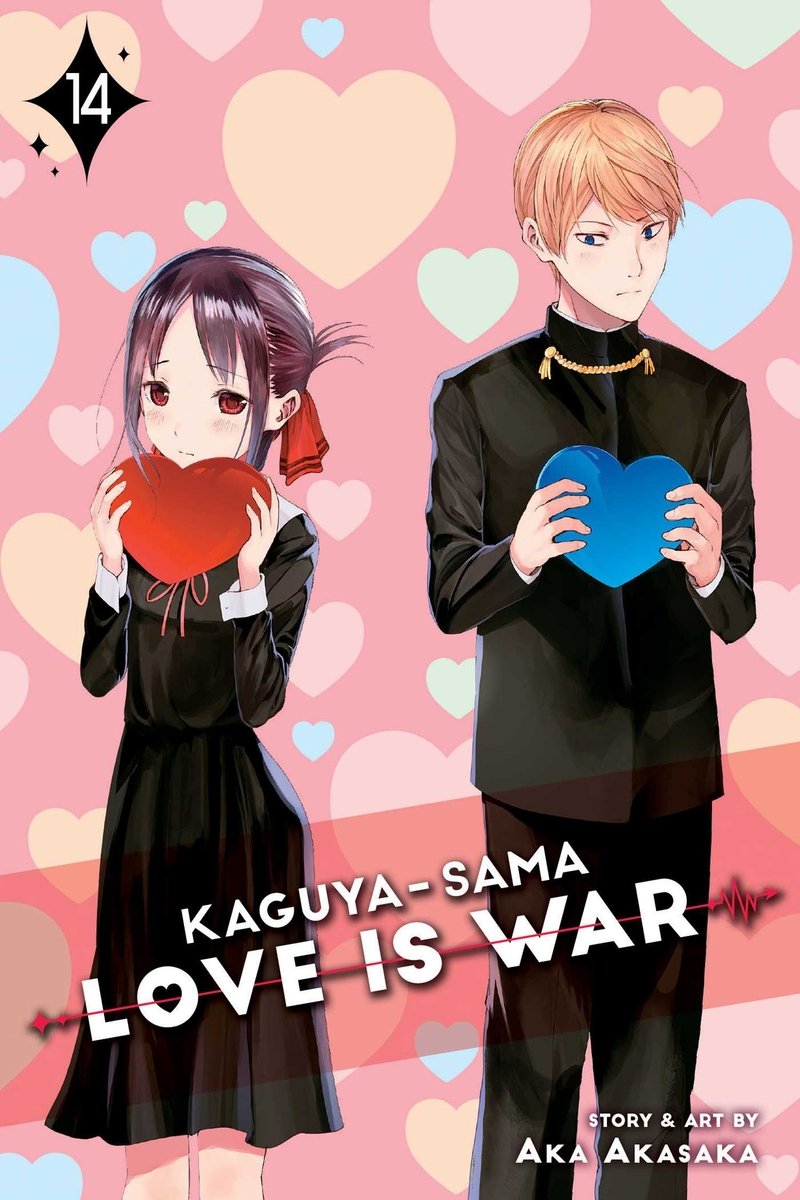
Seinen has many romance titles that break this emotional barrier as well. Kaguya-sama: Love is War, published weekly in Weekly Young Jump, demonstrates this clearly. Much like Horimiya, the emotions surrounding their relationship are the story itself.
The entire premise is about two people who are too proud to confess their feelings. There is no action subplot, nor is the romance treated as a reward after a trope or a milestone is met narratively. The romance is the story – chapter after chapter, week after week, for over five years.
If demographic labels truly were a reliable measure of which elements a story could prioritize, romance series like Horimiya and Kaguya-sama: Love is War would not exist as they do. Both demonstrate that shounen and seinen romance are fully capable of psychological intimacy, emotional vulnerability, and relationship-driven storytelling without defaulting to action or spectacle. In doing so, they reject the assumption that romance in shounen and seinen must remain secondary to another narrative focus. The emotional vulnerability and romantic tension are not distractions from the story; they are the story itself.
What's Actually Changing with the Audience
One of the more interesting shifts in recent years isn't just about which manga is getting published, but it's about who's reading what. Weekly Shonen Jump has made deliberate moves to broaden its readership to include female readers, and since the early 2010s, more than 50 percent of the magazine’s readership has been female. That editorial decision (made as print circulation broadly declined) helped romance-forward titles find a home in one of the most-read magazines in Japan.
At a 2022 business seminar, Crunchyroll noted that existing shoujo titles tend to over-perform relative to expectations when they do get animated. That says two things at once: there's still real demand for emotionally-driven romance content from female demographics, and that demand is currently being partially met by shounen and seinen romance titles filling a gap.
The rise of shounen romance title attracting large female fanbases is definitely not accidental; recent popular shounen romance series have the emotional sincerity and character investment that readers look for regardless of which magazine originally published them. At the same time, the traditional shoujo magazines have quietly contracted since the late 2000s, with readers now discovering content through streaming and social media rather than print magazine subscriptions.
None of this means shoujo is disappearing, of course. Fruits Basket, which received a beloved full remake in 2019-2021, reminded a new generation why the genre still matters. But the reader who might have discovered it through a shoujo magazine in 2005 today finds romance manga through anime recommendation lists and TikTok, where the label on the magazine doesn't show up in the metadata.
Is Shounen Romance Better?
Neither demographic is better than the other. If you like romance as a genre, then you’ll find things to love about both perspectives that shounen or shoujo romance brings. There are many different stories out there and they all offer something unique. If you're looking for an emotional experience about falling in love, you can't get much better than a classic shoujo like Fruits Basket or Kimi ni Todoke.
As with any other genre or type of writing, there's lots of history behind shoujo and how it has developed into what it is today. What shoujo brings is its long history of emotional development between characters and that is very difficult for most other types of writing to duplicate. If you want a long-running slow burn where every chapter inches the couple closer while keeping you entertained with comedy, character dynamics, and satisfying payoffs, shounen and seinen romance has a deep catalog.
The most honest answer is to ignore the label and read the story. The demographic label serves as a context for magazine publishing and has no bearing on how much you like a given romance manga. A woman in her 40s reading something published in Weekly Shonen Jump may not mean it was intended to target her initially, but it can still appeal to her. There are teenage boys who enjoy shoujo manga, as well. Ultimately the best romance manga is good regardless of who it was marketed towards.
So go ahead and read what you want to enjoy. We can appreciate every medium without judging the cover. When you're ready to dive into your next romance shounen or classic shoujo, be sure to check out the manga prices comparison tool. It’s the easiest way to find and compare new, used, out-of-stock, and out-of-print manga from multiple sources, helping you add more romance to your manga collection.